
The global legal cannabis market hit $46.03 billion in 2026. Explore how nano-emulsion and precision dosing are redefining consumption for a high-tech era.
The global cannabis industry has officially shed its "stoner" archetype, transforming into a $46.03 billion high-tech economy as of 2026. This shift isn't just about where consumption is legal—it's about how technology is fundamentally redefining the relationship between the plant and the consumer. From precision-dose medical inhalers to nano-emulsion beverages that kick in within minutes, the counter-culture staple has been "Silicon Valley-ified" into a standardized, data-backed wellness commodity.
The transformation is driven by a convergence of regulatory breakthroughs in Europe and the Americas, coupled with a surge in IoT-enabled hardware and AI-driven cultivation. As consumers move away from legacy smoking habits toward "California sober" lifestyles and functional use cases, the industry is racing to provide the same level of consistency found in pharmaceutical or high-end consumer goods. This article explores the technological advancements and global market shifts that are setting the stage for the next decade of cannabis consumption.
The global cannabis map is expanding through a "Green Wave" that has legalized recreational or medical use in over 50 jurisdictions by 2026, driven by fiscal pressure and scientific validation. While North America remains the dominant revenue driver, Europe is rapidly becoming the innovation center due to high-profile reforms in Germany and the Czech Republic.
A 2026 report from CompaniesHistory notes that the market hit $46.03 billion this year, up from $40.24 billion in 2025. This growth is anchored by the German Cannabis Act, which went into effect in April 2024, allowing adults to possess up to 25 grams in public and grow three plants at home. Following this lead, the Czech Republic approved adult-use cultivation and possession effective January 2026, signaling a continent-wide shift toward regulated models.
In the United States, the industry has entered a "consolidation phase." Despite recording its first-ever annual revenue decline in 2025 due to price compression, the market is rebounding in 2026. A pivotal December 2025 executive order to expedite rescheduling to Schedule III has begun to alleviate the massive federal tax burdens that previously stifled growth. This regulatory easing is allowing companies to shift their focus from mere survival to aggressive technological R&D, particularly in the realm of medical-grade precision hardware.
Meanwhile, the Asia-Pacific region is emerging as the fastest-growing market for medical applications. Countries like Australia and South Korea are strengthening legal frameworks to support cannabinoid-based research, creating a global trade network where standardized, GMP-certified products are becoming the baseline requirement for international exports.
Consumer demand has shifted from high-potency products to precision-dosed experiences that prioritize functional benefits over intense psychoactive effects. Smart vaporizers and IoT-enabled inhalers are now replacing the guesswork of traditional consumption by delivering measured milligrams of cannabinoids and real-time biometric tracking.
As Verdi Cannabis explains in their 2026 guide, beginners and medical patients are increasingly seeking products with balanced 1:1 CBD-to-THC ratios. This focus on the "entourage effect"—the synergy between cannabinoids and aromatic terpenes like myrcene or limonene—is being enabled by new hardware. Modern vaporizers can now be programmed to heat specifically to the boiling points of target terpenes, allowing users to customize their session for sleep, focus, or pain relief.
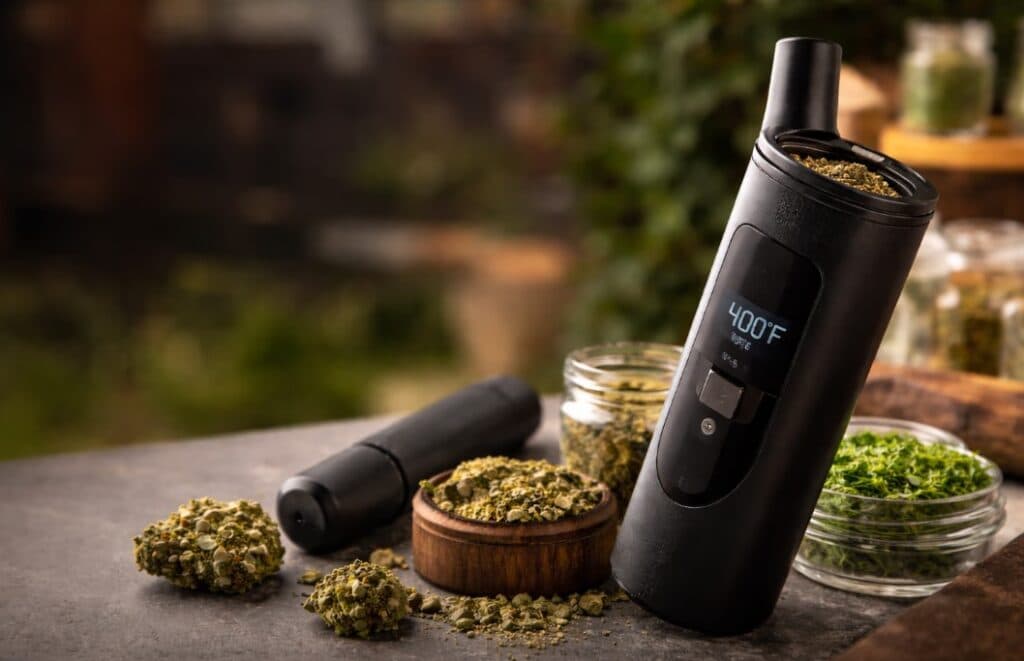
The integration of IoT (Internet of Things) into consumption devices is the most significant leap. Manufacturers are releasing smart inhalers that sync via Bluetooth to health apps, recording exactly how many milligrams of THC or CBD were consumed and mapping those doses against the user’s reported symptoms. This data-driven approach is particularly critical for the 42.4% of legal users who consume for chronic pain management, as it provides a level of medical accountability previously unavailable in the legacy market.
Furthermore, these devices are designed to appeal to a more sophisticated demographic. The "Silicon Valley-ification" of the industry means that products now look more like high-end wellness tech than drug paraphernalia. This design language is helping to lower the barrier for older adults and professionals who are exploring cannabis for the first time but are wary of traditional consumption methods.
The most disruptive technology in 2026 is nano-emulsion, a process that shrinks cannabinoid oil droplets to less than 200 nanometers, allowing them to become water-soluble and bypass the slow digestive process. This breakthrough has solved the industry's longest-standing hurdle: the unpredictable, multi-hour wait time traditionally associated with cannabis edibles.
In traditional edibles, THC must pass through the liver, often taking 60 to 90 minutes to take effect. Nano-emulsified products, however, are absorbed directly through the mucous membranes and intestinal walls. This results in an onset time of 10 to 20 minutes, mirroring the experience of drinking a glass of wine. This "fast-acting" capability is driving the explosive growth of the cannabis beverage category, which is currently the fastest-growing sub-sector in the edible market.
The quality of consumption starts in the grow room, where AI-powered systems and machine learning are now managing every environmental variable to ensure chemical consistency. In 2026, large-scale cultivators are using real-time IoT sensors to monitor light intensity, CO₂ levels, and nutrient concentrations, making automated adjustments that were once the domain of human master growers.
According to Cannabis Risk Manager, AI algorithms can now predict plant growth patterns and identify the earliest signs of pests or mold before they are visible to the naked eye. This level of precision is essential for producing the consistent cannabinoid profiles required for medical-grade products. Beyond yield optimization, these technologies are also tackling the industry’s environmental footprint through automated LED lighting schedules that mimic natural sunlight while providing significant energy savings compared to legacy high-pressure sodium systems.
The trend toward data-driven cultivation is also enabling "precision breeding." Using CRISPR and other gene-editing techniques, breeders are developing strains with targeted traits, such as increased resistance to drought or specific terpene profiles designed to treat anxiety. This scientific rigor is transforming cultivation from an artisanal craft into a sophisticated branch of agricultural biotechnology.
The data from 2026 reveals a significant transformation in who is consuming cannabis and why. No longer restricted to a niche subculture, cannabis has moved into the mainstream as a functional tool for wellness and social interaction. According to data from Gallup and Flowhub, approximately 15% of American adults are now active users, with support for legalization reaching an all-time high of 87%.
One of the most notable trends is the rise of the "California sober" lifestyle—where individuals replace alcohol with low-dose, fast-acting cannabis beverages. This shift is particularly prevalent among Millennials and Gen Z, who prioritize health-conscious choices and seek to avoid the hangovers and caloric intake associated with alcohol. The medical segment also remains a powerhouse, holding a 69% share of the market by revenue type, as patients increasingly turn to cannabis for chronic pain, anxiety, and sleep disorders.
This "functional use" model is supported by the diversification of product formats. From discreet sublingual strips to transdermal patches that provide localized relief without psychoactivity, the industry is catering to users who need to remain productive and high-functioning throughout their day. This normalization is effectively de-stigmatizing the plant, positioning it alongside vitamins and athletic supplements in the modern consumer’s toolkit.
Inhalation (Vape)
Nano-Beverages
Traditional Edibles
As we move through 2026, the global cannabis industry is no longer defined by the "green rush" of pure speculation, but by a mature technological ecosystem focused on consumer safety and product consistency. The shift from flower to formulated products—oils, beverages, and precision inhalers—reflects a consumer base that values control, predictability, and health-centric delivery.
For the modern consumer, the "Future of Flow" means having access to a high-tech toolkit that treats cannabis as a functional supplement rather than an intoxicating escape. As global regulations continue to harmonize and tech like nano-emulsion becomes the baseline, the distinction between "medical" and "lifestyle" cannabis will likely blur into a single, data-driven wellness category. The industry’s success over the next decade will be measured not just in billions of dollars, but in its ability to deliver the precision and trust that consumers now demand from every other part of their digital lives.
Traditional THC is oil-soluble and requires 60-90 minutes to digest. Nano-emulsion breaks THC into microscopic droplets that are water-soluble, allowing for absorption in 10-20 minutes.
Smart vaporizers use IoT sensors to prevent combustion, maintain precise temperatures that preserve terpenes, and track dosage to prevent over-consumption.
Initially, tech-heavy products carry a premium. However, automation in cultivation and manufacturing is expected to drive long-term prices down by increasing efficiency and reducing crop loss.
Tagged
Walk-in welcome. Bring your questions — our store teams answer cannabis questions every day.